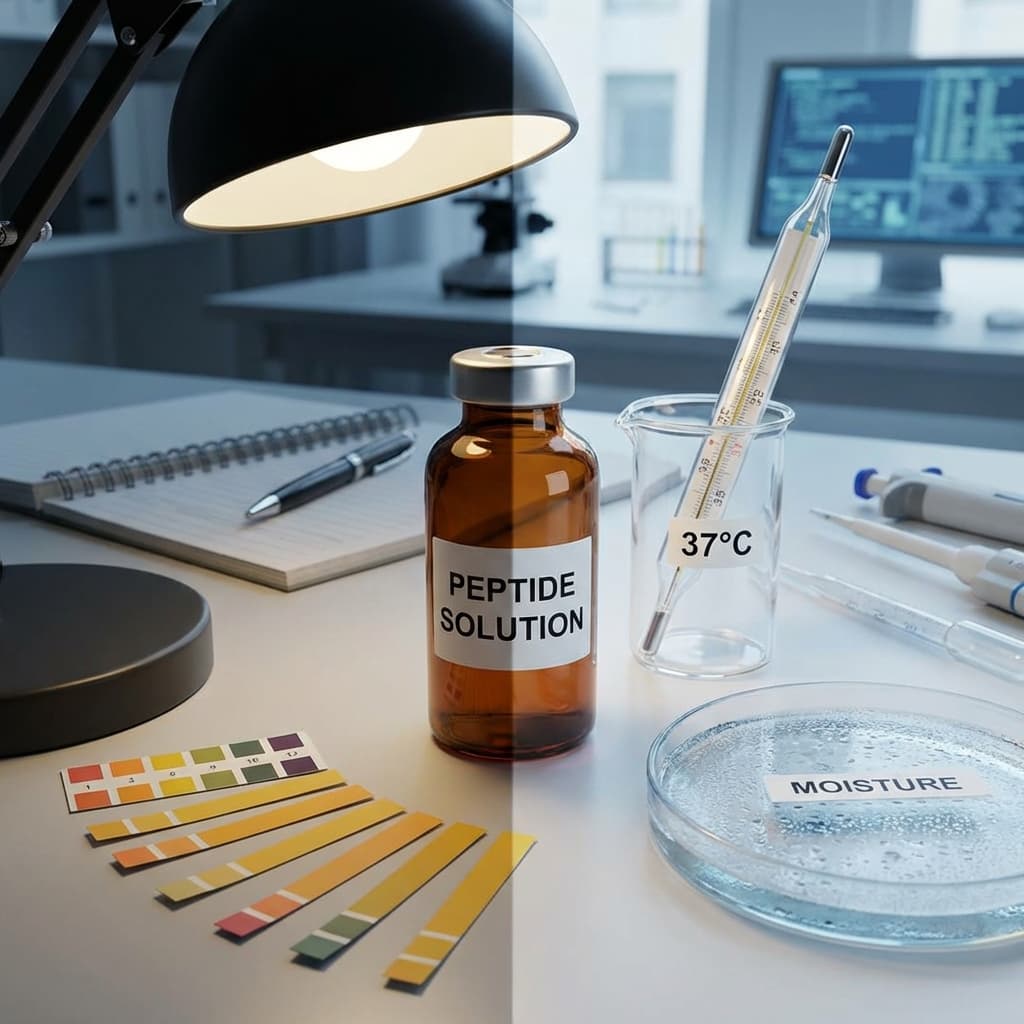
Chemical Degradation Pathways
Peptides can degrade through several chemical mechanisms. Understanding these pathways helps researchers implement proper handling protocols.
Oxidation
Amino acids containing sulfur (methionine, cysteine) or aromatic rings (tryptophan, tyrosine, histidine) are particularly susceptible to oxidation. Exposure to oxygen, light, and metal ions accelerates oxidative damage.
Hydrolysis
Peptide bonds can be cleaved by water, especially under extreme pH conditions or elevated temperatures. Asparagine-Glycine (Asn-Gly) sequences are particularly prone to hydrolysis.
Deamidation
Asparagine and glutamine residues can lose their amide groups, converting to aspartic and glutamic acid. This is pH-dependent and accelerated at neutral to basic pH.
Environmental Factors
Temperature
- Higher temperatures increase reaction rates exponentially
- Every 10°C increase roughly doubles degradation rate
- Freezing prevents most chemical degradation
pH
- Extreme pH (below 4 or above 8) accelerates hydrolysis
- Optimal stability typically between pH 4-6
- Some peptides require specific pH ranges
Light Exposure
- UV light causes photo-oxidation of sensitive residues
- Amber vials or foil wrapping provides protection
- Fluorescent lighting can cause damage over time
Physical Stability Issues
Aggregation
Peptides can self-associate, forming insoluble aggregates. This is often irreversible and results in visible cloudiness or precipitation.
Adsorption
Hydrophobic peptides may stick to container surfaces, reducing effective concentration. Low-binding tubes and proper surfactants can mitigate this issue.
Concentration Matters
Higher peptide concentrations increase aggregation risk. Consider storing at working concentrations or using stabilizers.