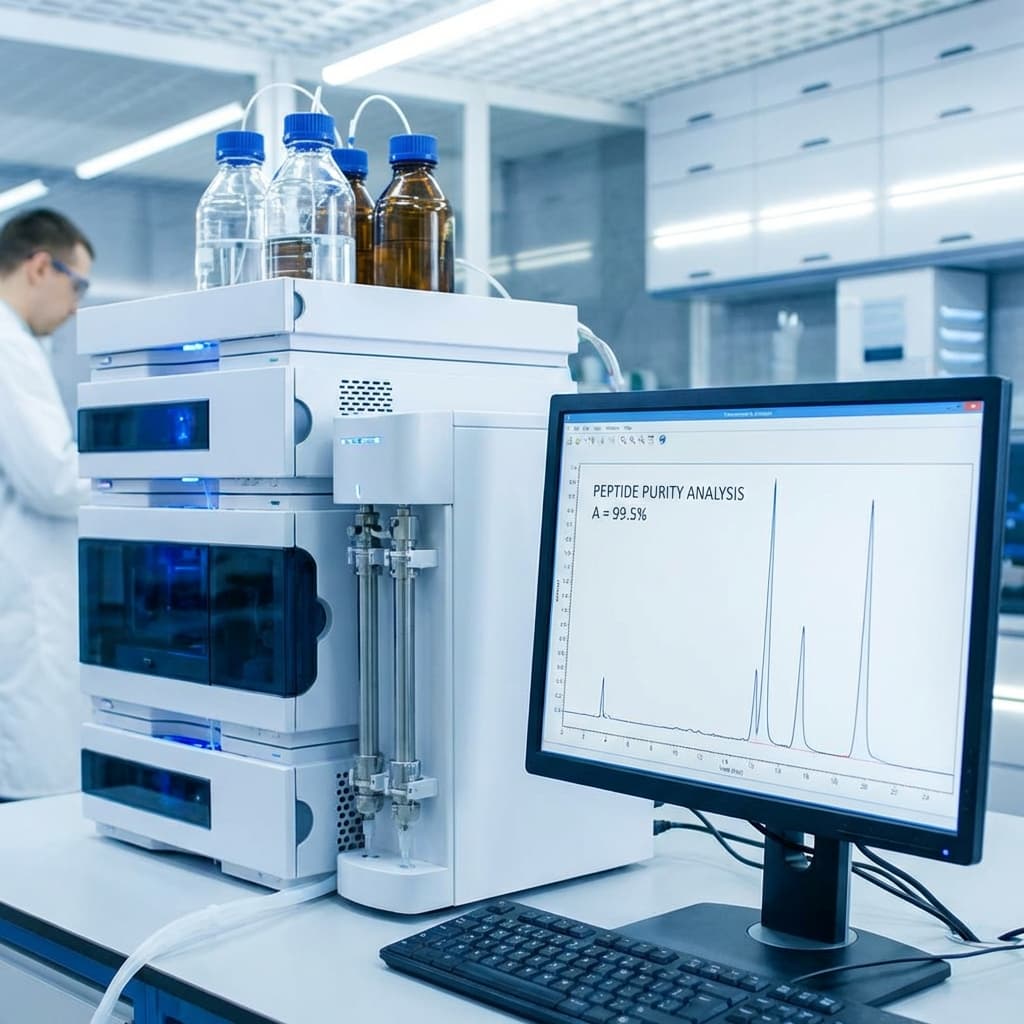
What Does Peptide Purity Mean?
Peptide purity refers to the percentage of the target peptide present in a sample, relative to impurities such as truncated sequences, deletion sequences, and other synthesis byproducts. A purity of 99% indicates that 99% of the peptide material is the intended sequence.
High-Performance Liquid Chromatography (HPLC) is the gold standard for measuring peptide purity. This analytical technique separates compounds based on their hydrophobicity, allowing precise quantification of the target peptide versus impurities.
Why Purity Matters in Research
In scientific research, consistency and reproducibility are paramount. Peptide impurities can introduce variables that compromise experimental results:
- Concentration-response accuracy — Impurities mean less active compound per milligram
- Off-target effects — Truncated sequences may have unpredictable biological activity
- Reproducibility issues — Batch-to-batch variation affects result consistency
- Data interpretation — Impurities can confound binding assays and bioactivity measurements
Purity Grade Standards
Research Grade (≥95%)
Suitable for preliminary screening and non-quantitative studies where absolute accuracy is less critical.
High Purity (≥98%)
Appropriate for most research applications including binding studies, cell-based assays, and quantitative experiments.
Ultra-High Purity (≥99%)
Required for precision research, in vivo studies, and applications where impurities could significantly impact results.
FastPeps Standard
All FastPeps peptides undergo rigorous HPLC testing with a minimum purity threshold of 98%, with most products exceeding 99%.
How to Verify Peptide Purity
Always request a Certificate of Analysis (COA) from your supplier. A proper COA should include:
- HPLC chromatogram with purity percentage
- Mass spectrometry data confirming molecular weight
- Batch number and synthesis date
- Storage recommendations