USA TESTED RESEARCH USE ONLY PEPTIDES - FREE FEDEX 2 DAY SHIPPING ON ORDERS OVER $200 - CLICK HERE TO LEARN ABOUT OUR LAB PARTNER REFERRAL PROGRAM!USA TESTED RESEARCH USE ONLY PEPTIDES - FREE FEDEX 2 DAY SHIPPING ON ORDERS OVER $200 - CLICK HERE TO LEARN ABOUT OUR LAB PARTNER REFERRAL PROGRAM!USA TESTED RESEARCH USE ONLY PEPTIDES - FREE FEDEX 2 DAY SHIPPING ON ORDERS OVER $200 - CLICK HERE TO LEARN ABOUT OUR LAB PARTNER REFERRAL PROGRAM!USA TESTED RESEARCH USE ONLY PEPTIDES - FREE FEDEX 2 DAY SHIPPING ON ORDERS OVER $200 - CLICK HERE TO LEARN ABOUT OUR LAB PARTNER REFERRAL PROGRAM!
All Protocols
Sterilization

Sterile Filtration with 0.22μm Syringe Filters

6 min read
Standard Operating Procedure
Sterile Filtration with 0.22μm Syringe Filters

When Do You Need Sterile Filtration?

Sterile filtration removes bacteria and other microorganisms from a solution by passing it through a membrane with pores small enough (0.22 micrometers) to block most bacteria. You typically need this when:

  • Reconstituting peptides with plain sterile water (no preservative)
  • Preparing custom buffer solutions
  • Combining peptides with other compounds
  • Any situation where sterility is critical for your research

If using bacteriostatic water directly from a sealed vial, filtration is generally not necessary — the benzyl alcohol preservative handles microbial control.

Choosing the Right Filter Membrane

This is the most important decision you'll make. Different filter materials bind to peptides at different rates — choose the wrong one and you could lose a significant portion of your peptide.

Recommended: PES (Polyethersulfone)

PES filters have very low protein/peptide binding, high flow rates, and work well with aqueous solutions. This is the gold standard for peptide work.

Acceptable: Hydrophilic PVDF

PVDF (Polyvinylidene Fluoride) has low binding properties. Make sure it's labeled "hydrophilic" — standard PVDF is hydrophobic and won't work well with water-based solutions.

Avoid: Nylon and Cellulose

Nylon filters have high protein-binding capacity and can absorb 20-40% of your peptide. Cellulose acetate (CA) filters also bind proteins significantly. Never use these for peptide solutions.

The Filter Size Matters Too

For volumes under 1mL, use a small-diameter filter (4mm or 13mm). Standard 25mm filters have a larger "hold-up volume" — the liquid that stays trapped in the filter housing. With small volumes, this can mean losing 20-30% of your solution.

Step-by-Step Filtration Process

Step 1: Prepare Your Solution

Ensure your peptide is fully dissolved. If you see any cloudiness or particles, address this before filtering (see our Solubility Troubleshooting guide).

Step 2: Load the Syringe

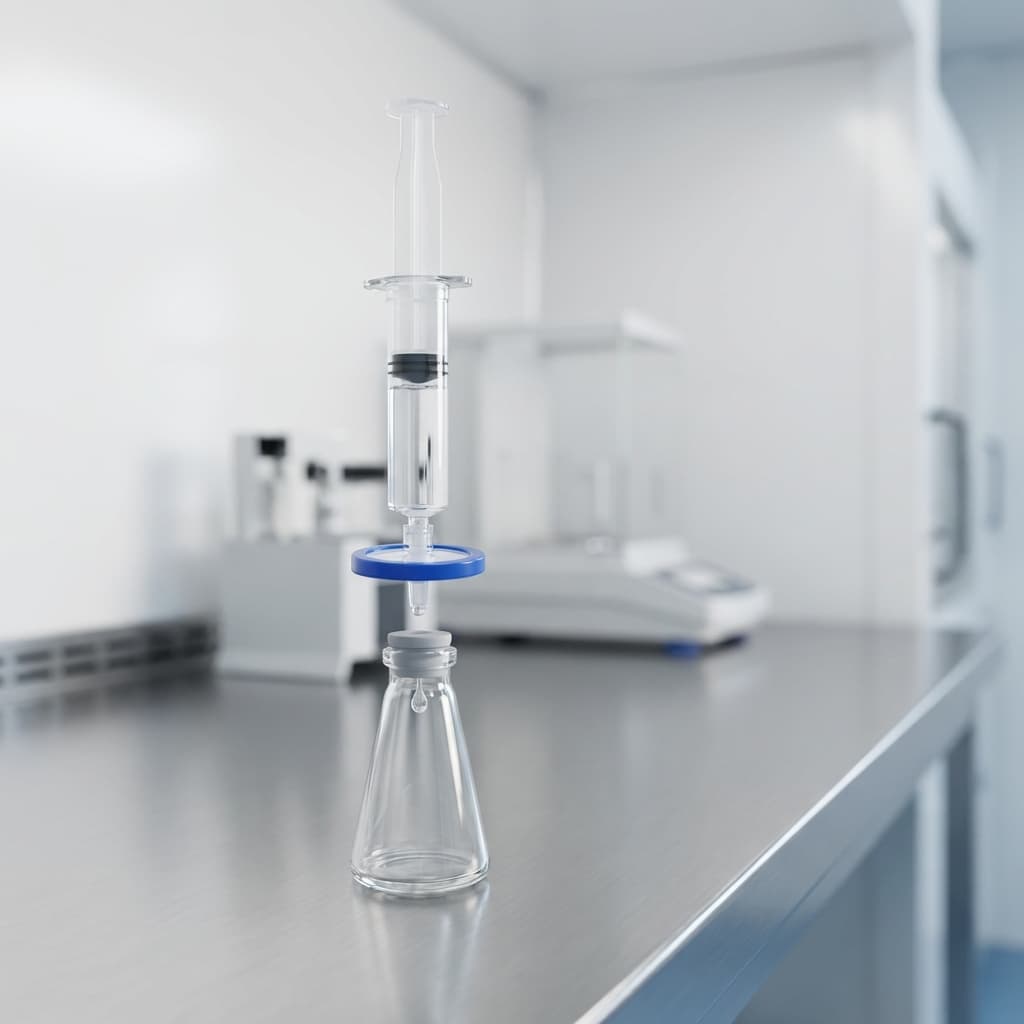
Draw your solution into a sterile Luer-lock syringe. Luer-lock connections have a threaded fitting that prevents the filter from popping off under pressure.

Step 3: Attach the Filter

Open the filter packaging aseptically (touch only the outer edges) and screw it firmly onto the syringe tip. Keep the filter outlet cap on until you're ready to dispense.

Step 4: Prime the Filter (Optional)

For maximum precision, discard the first 2-3 drops of filtrate. The initial liquid passing through may have slightly lower concentration as the membrane becomes saturated with peptide binding sites.

Step 5: Filter with Steady Pressure

Apply gentle, consistent pressure to the plunger. If it's very difficult to push, you may have particulates clogging the filter — stop and check your solution.

Step 6: Dispense into Sterile Vial

Filter directly into a sterile receiving vial. Cap or stopper the vial immediately after finishing.

Minimizing Peptide Loss

  • Use PES or hydrophilic PVDF — never nylon
  • Use the smallest filter diameter practical — less surface area means less binding
  • Pre-wet the filter — for very valuable peptides, push a small amount of plain buffer through first
  • Work at higher concentrations — percentage loss is lower when more peptide is present

Ready to Calculate Your Dosing?

Use our peptide calculator to determine exact reconstitution volumes.

Open Calculator