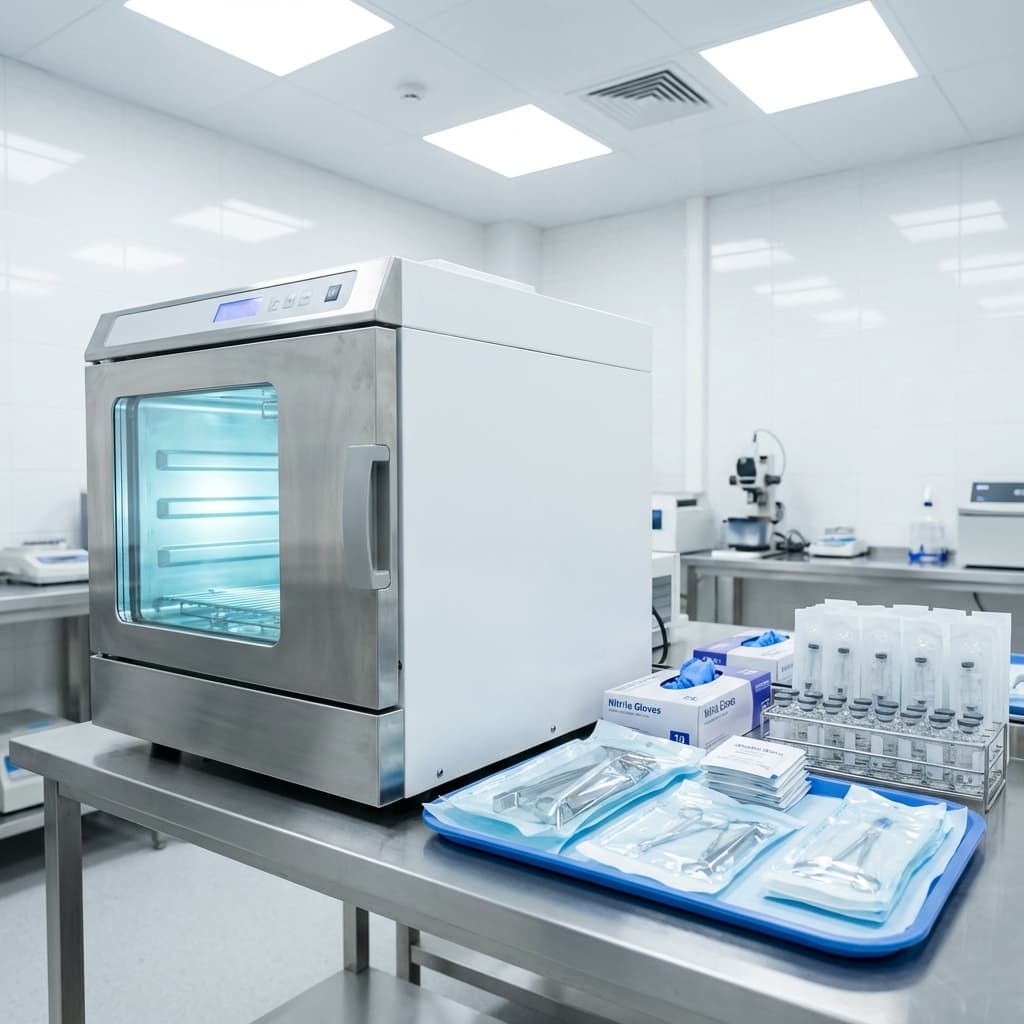
Sterilization is not just "cleaning"—it is the total eradication of all viable life forms. In peptide research, maintaining an Aseptic Chain is the only way to ensure that your expensive lyophilized compounds do not become bioreactors for bacterial growth.
🌡️ Thermal Destruction (The Autoclave)
The clinical gold standard is 121°C at 15 PSI for 20 minutes. This combination of pressurized steam denatures the core proteins of even the most resilient thermophilic spores.
Surface disinfection relies on chemical penetration. If the disinfectant evaporates before the "kill-time" is reached, the surface remains contaminated.
⏱️ Disinfectant Contact Time (Kill-Time)
Required Contact Duration
Effective against: Bacteria/Fungi
⚠️ The IPA Fallacy
High-purity (99%) Isopropyl Alcohol is less effective than 70% IPA. Water is required as a catalyst for the alcohol to cross the bacterial cell wall. 99% IPA causes instant protein coagulation on the cell wall, which actually protects the bacteria internal core.
Organize your research area into distinct microbial zones to prevent cross-contamination.
Black Zone
Unopened supplies, outer packaging.
Grey Zone
Disinfected workspace, gloved hands.
White Zone
Open vials, exposed needle tips.
Sequence of Operation
- Mechanical Debridement: Wipe the surface with 70% IPA to remove physical dust/skin cells.
- Saturation: Spray a fresh layer of IPA and allow it to air-dry (30+ seconds).
- Septum Prep: Swab the vial rubber stopper and wait 15 seconds. Do not blow on it to dry.
🔬 Endotoxin Control
Sterility does not mean "Endotoxin-Free." Endotoxins are debris from dead bacteria cell walls (LPS) that can trigger inflammatory responses. Only use Sterile, Non-Pyrogenicconsumables to ensure zero endotoxin interference.