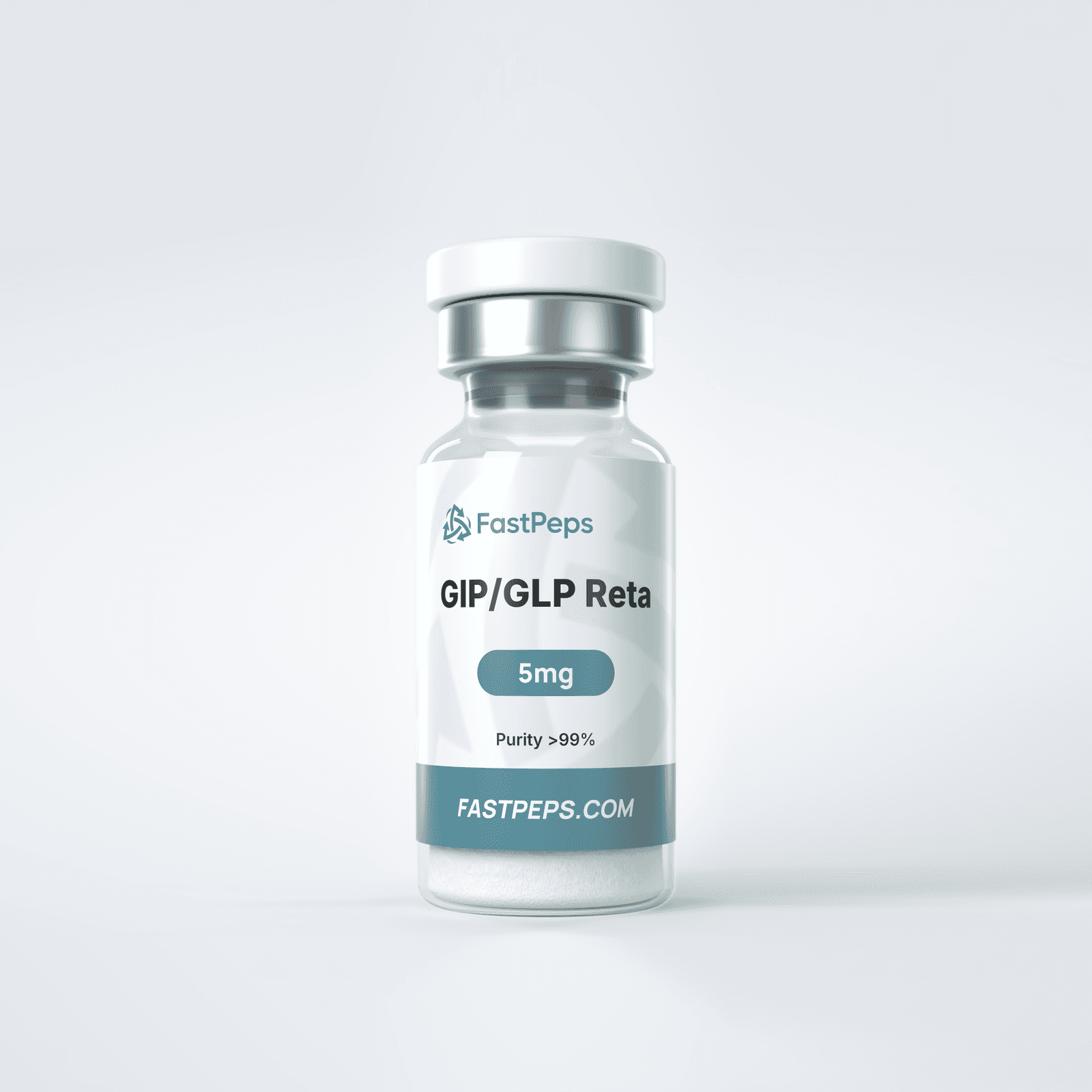
GIP/GLP Reta
A triple receptor agonist (GIP, GLP and glucagon) studied in metabolic research.

For research and educational purposes only. PepTalk discusses what researchers study in laboratory settings, not medical advice.
The short version
Reta is the triple-agonist — a single peptide that switches on three different metabolic receptors at once (GIP, GLP-1, and glucagon). That third pathway is what sets it apart from the dual-agonist compounds before it, and it's why this compound has become one of the most closely watched molecules in current metabolic research.
What researchers are looking at
A handful of gut and pancreatic hormones act on metabolic receptors. Most research compounds in this space mimic one or two of them. The triple-agonist is built to engage three signaling pathways together (GIP, GLP-1, and glucagon), which is the mechanism researchers find most interesting about it.
Two of those receptors (GIP and GLP-1) are the same ones earlier compounds in this space target. The third, the glucagon receptor, is the new addition. In published animal models it is linked to how energy is used and how fat is processed in the liver.
Most of the published work comes from animal and receptor models. The compound has also entered human trials, which is why it is one of the most closely watched molecules in the category, though the picture is still early.
GIP pathway
Engages the GIP receptor, one of the two gut-hormone (incretin) receptors.
GLP-1 pathway
Activates the GLP-1 receptor, the receptor most familiar from earlier incretin research.
Glucagon pathway
Adds the glucagon arm, the receptor that sets it apart from dual agonists, studied in animal models of liver metabolism.
Where the evidence stands
an honest mapWell characterized in animal models
Has entered human trials, among the most advanced in its class
From the lab toward the clinic
Unlike most compounds in early research, the triple agonist has moved into randomized human trials, a meaningful step from "promising in models" toward rigorous data.
At a glance
What it is
A triple-agonist peptide
GIP + GLP-1 + glucagon
Studied for
Metabolic research
How long it lasts
Long-acting
~140 h half-life
Research stage
In human trials
Phase 2
How it arrives
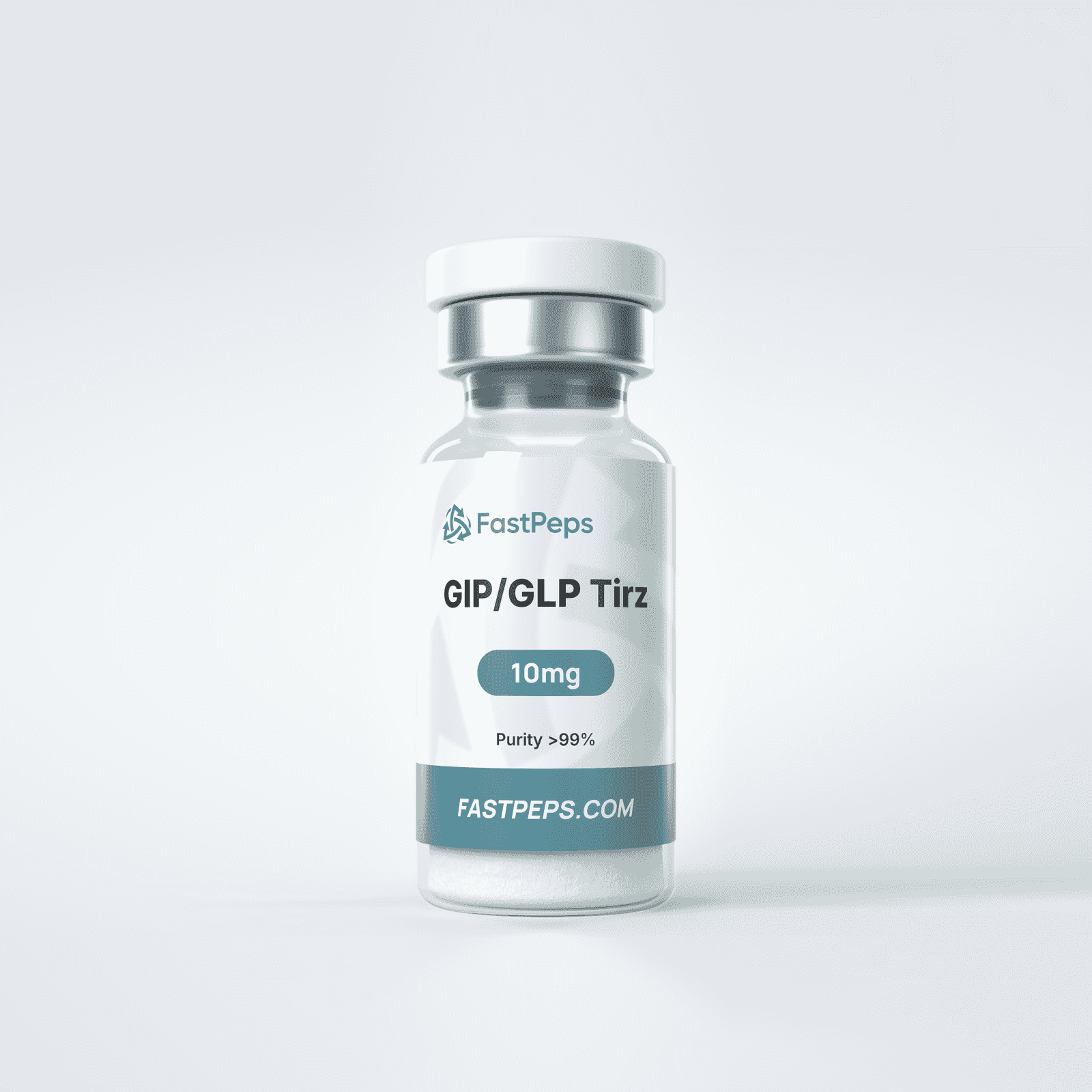
Lyophilized powder
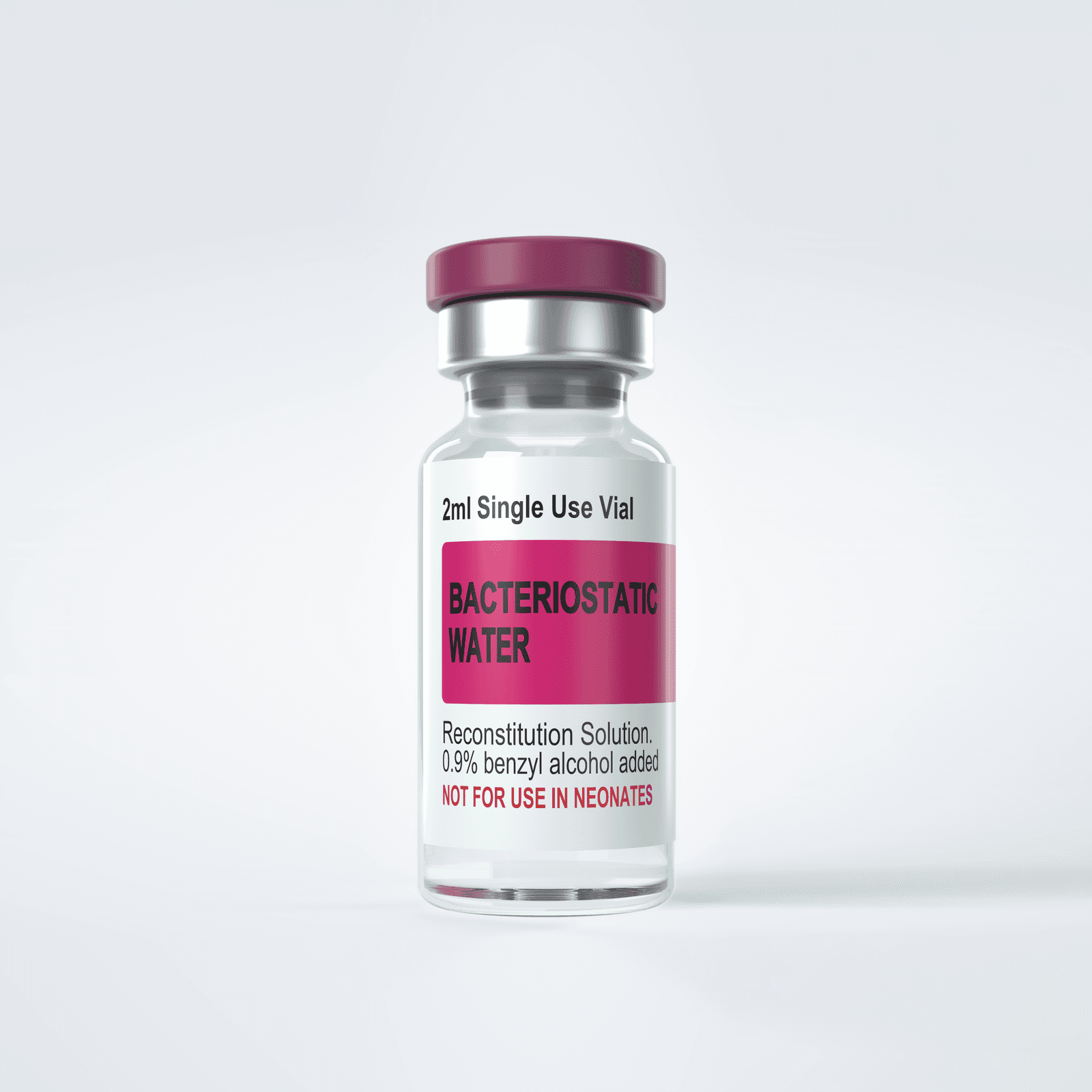
Ships freeze-dried for stability and shelf life. Before research use, it's reconstituted with bacteriostatic water.
Bacteriostatic water
Needed to reconstitute
Certificate of analysis
Common questions
All products on FastPeps are labeled Research Use Only (RUO), and this is a legal requirement, not just fine print. It means these compounds are sold strictly for scientific research and laboratory purposes, not for personal use, self-administration, or medical treatment. This label exists because these compounds have not completed the FDA approval process to be sold as drugs or supplements. When you purchase from FastPeps, you are agreeing the product is for research purposes only.
For laboratory and research use only. Sold exclusively for in-vitro research and laboratory experimentation. Not a drug, supplement, or article intended for human or veterinary use; nothing here is medical advice or a claim of therapeutic benefit. Statements describe findings from published research.
Your Reliable Source for High-Quality Research Peptides
FastPeps is more than just a trusted U.S. supplier of research peptides. We are a catalyst for scientific advancement, dedicated to providing the highest quality peptides that empower our clients to push the boundaries of research.