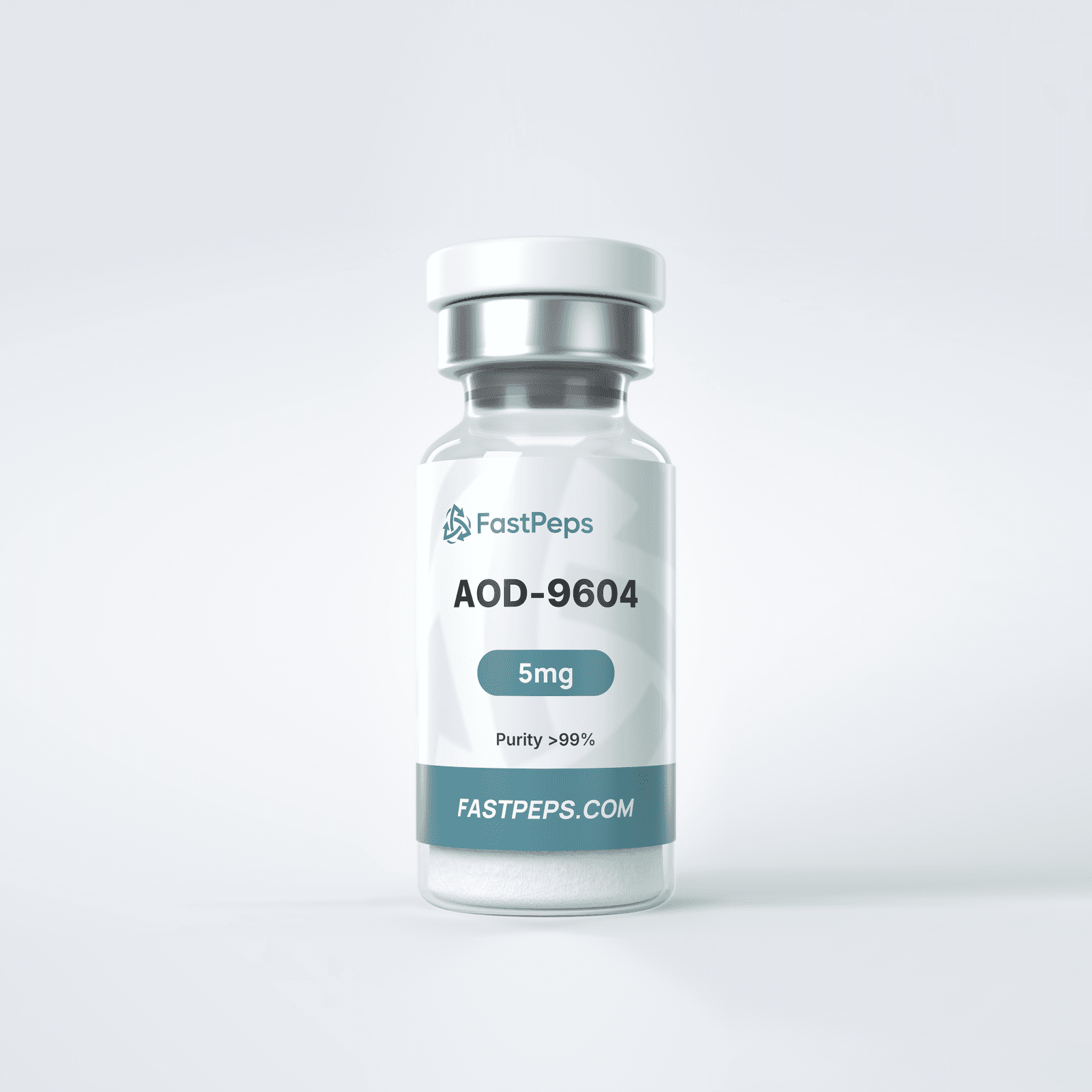
AOD-9604
A modified fragment of growth hormone studied in metabolic research.

For research and educational purposes only. PepTalk discusses what researchers study in laboratory settings, not medical advice.
The short version
AOD-9604 is a small synthetic peptide copied from the tail end of human growth hormone, specifically residues 177–191, with one stabilizing tweak at the front. Researchers study it because, in lab models, it acts on fat cells without switching on the full growth-hormone receptor.
What researchers are looking at
Growth hormone acts on many different tissues at once. AOD-9604 is a fragment of that larger hormone, and in lab models it appears to act mainly on fat cells, where researchers measure lipolysis (the breakdown of stored fat inside the cell) and reduced fat storage.
What draws scientific attention is the separation. Because the fragment lacks the binding regions needed to switch on the full growth-hormone receptor, researchers observe in lab models that it does not raise IGF-1. In the literature, this is framed as isolated activity on fat cells without the broader growth signaling of the whole hormone.
Most of this evidence comes from animal and test-tube work, where the fragment acts on fat tissue through β3-adrenergic pathways. The findings describe what researchers measure in these models, not results in people. AOD-9604 is unusual in this class for having also entered human trials.
β3 receptors engaged
In lab models, the fragment engages β3-adrenergic receptors on fat cells and drives lipolysis inside the cell.
Lipogenesis inhibited
In the same models, lipogenesis (new fat being made inside the cell) is inhibited within the fat cell.
Growth signaling left out
Without the full receptor-binding domains, it does not raise IGF-1 in lab studies.
Where the evidence stands
an honest mapConsistent data in animal models
Has entered human trials
From the lab toward the clinic
AOD-9604 went further than most fragments in this class: it has entered later-stage human clinical research, placing it beyond purely preclinical compounds in how far the human work has been carried.
At a glance
What it is
A GH fragment
residues 177–191
Studied for
Metabolic research
What it skips
No IGF-1 rise
Research stage
Human trials reached
Phase 2/3
How it arrives
Lyophilized powder
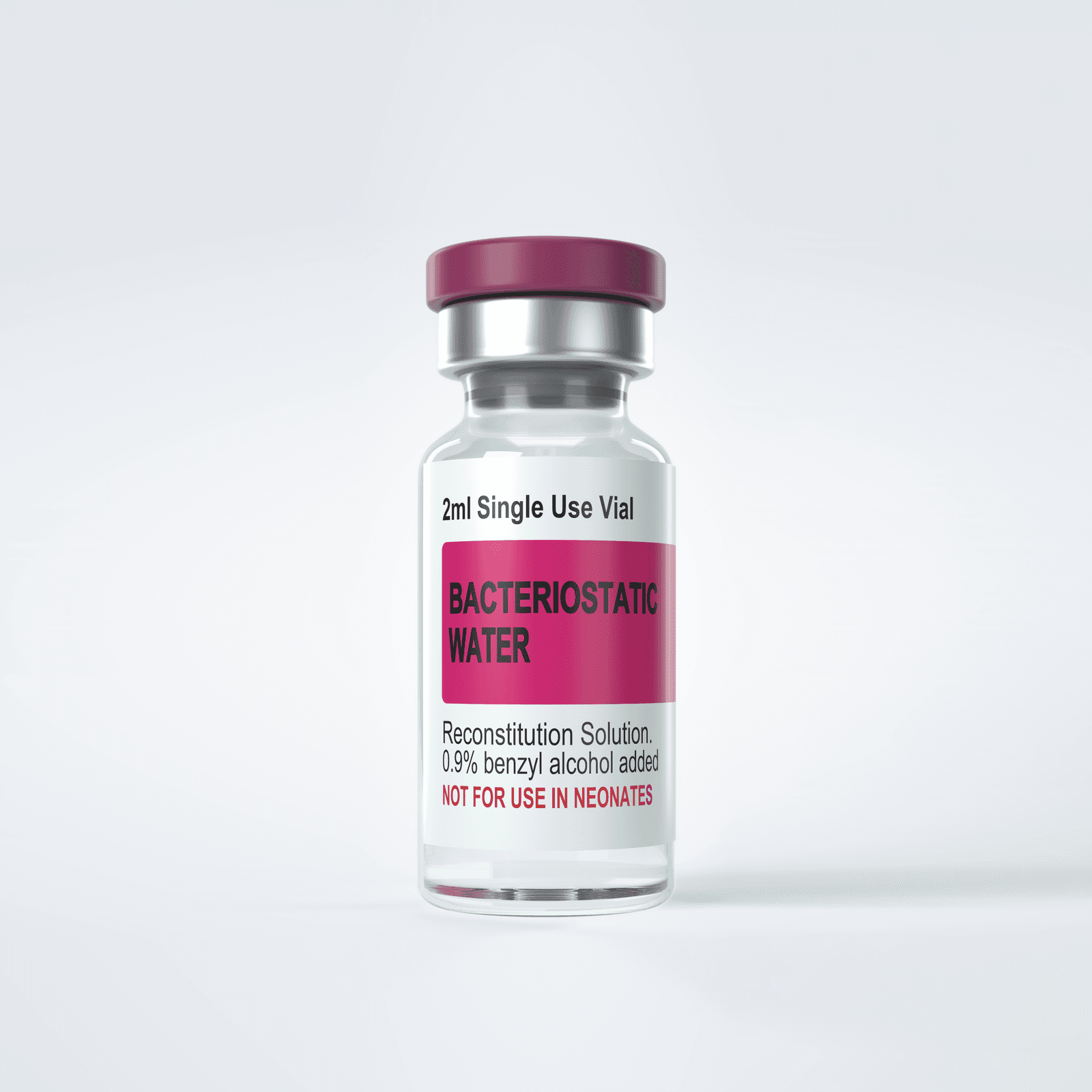
Ships freeze-dried for stability and shelf life. Before research use, it's reconstituted with bacteriostatic water. Once reconstituted it degrades easily if agitated, so it's handled gently and kept refrigerated.
Bacteriostatic water
Needed to reconstitute
Certificate of analysis
Common questions
All products on FastPeps are labeled Research Use Only (RUO), and this is a legal requirement, not just fine print. It means these compounds are sold strictly for scientific research and laboratory purposes, not for personal use, self-administration, or medical treatment. This label exists because these compounds have not completed the FDA approval process to be sold as drugs or supplements. When you purchase from FastPeps, you are agreeing the product is for research purposes only.
For laboratory and research use only. Sold exclusively for in-vitro research and laboratory experimentation. Not a drug, supplement, or article intended for human or veterinary use; nothing here is medical advice or a claim of therapeutic benefit. Statements describe findings from published research.
Your Reliable Source for High-Quality Research Peptides
FastPeps is more than just a trusted U.S. supplier of research peptides. We are a catalyst for scientific advancement, dedicated to providing the highest quality peptides that empower our clients to push the boundaries of research.