
For research and educational purposes only. PepTalk discusses what researchers study in laboratory settings — not medical advice. Products are sold for laboratory research use only.
Research Blend
Wolverine Blend
A combination of two peptides widely studied in tissue repair and recovery research. The blend pairs compounds investigated for complementary roles in healing — one focused on localized repair, the other on systemic recovery and circulation.
For research and educational purposes only. PepTalk discusses what researchers study in laboratory settings — not medical advice. Products are sold for laboratory research use only.
The short version
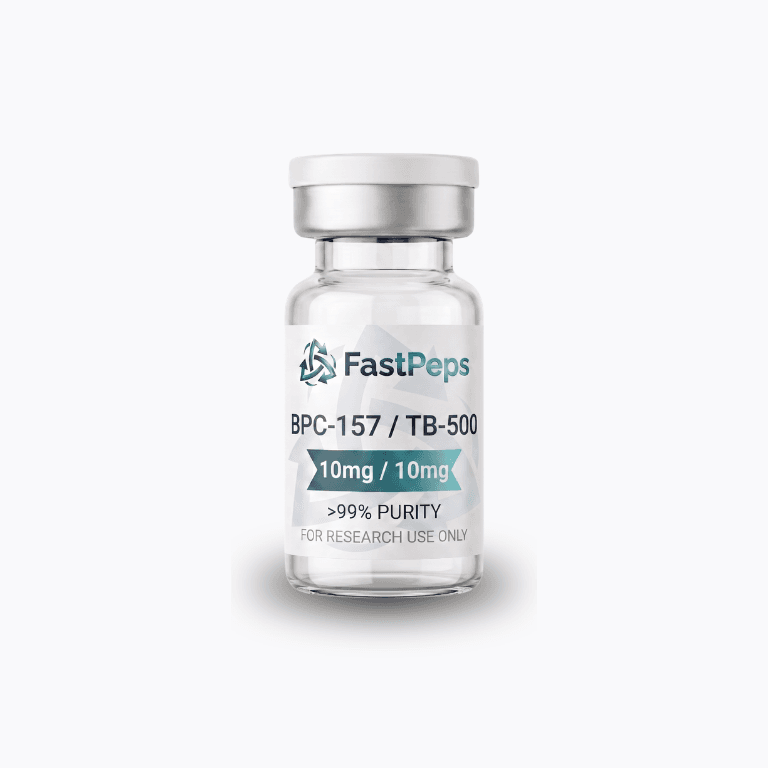
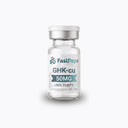
The Wolverine Blend combines BPC-157 and TB-500 — the two most widely studied repair peptides — in a single lyophilized vial. They work through different but complementary mechanisms, so pairing them lets researchers study both repair pathways at once: the vascular side (BPC-157) and the structural, cell-movement side (TB-500).
What researchers are looking at
Tissue repair is something the body already does on its own, and it depends on more than one process happening together. New blood vessels have to grow in to feed a damaged area, and repair cells have to migrate to the injury site to rebuild it. This blend pairs two peptides that researchers associate with those two different sides of the same job.
BPC-157 is the most-studied compound in tissue-repair research, where it's described as promoting angiogenesis (new blood-vessel growth) and cytoprotection, along with activating growth factors that signal repair. TB-500, a fragment of the protein thymosin beta-4, is studied separately for a different mechanism: it binds actin — the structural protein cells use to move — which is associated in the literature with driving cell migration toward injury sites.
Because the two peptides cover different parts of the repair process — blood supply on one side, cellular movement and structure on the other — researchers pair them to study a more complete picture than either offers alone. The great majority of this work is in animal and lab models, so the findings are best read as what researchers observe in those settings rather than proven human outcomes.
Blood supply grows in
BPC-157 is studied for promoting angiogenesis — new blood vessels that feed the damaged area.
Repair cells move in
TB-500 binds actin, the protein cells use to move, and is associated with driving cells toward the injury site.
Two pathways together
Pairing the vascular side with the cell-movement side lets researchers study both halves of repair at once.
Where the evidence stands
an honest mapBoth peptides extensively studied in animal & lab models
Mostly preclinical; TB-500's parent (TB-4) reached a Phase 3 corneal eye-drop trial
From the lab toward the clinic
Most of the work behind both peptides is preclinical. The clearest human data comes from TB-500's parent protein, thymosin beta-4, which was studied in a Phase 3 randomized trial as an eye drop for corneal wound healing — a different formulation, but a notable step toward rigorous human data for the repair pathway TB-500 represents.
At a glance
What it is
A two-peptide blend
BPC-157 + TB-500
Studied for
Tissue repair & recovery
blood supply + cell migration
How it works
Two pathways at once
angiogenesis + cell movement
Research stage
Mostly preclinical
animal & lab models
How it arrives
Lyophilized blend powder
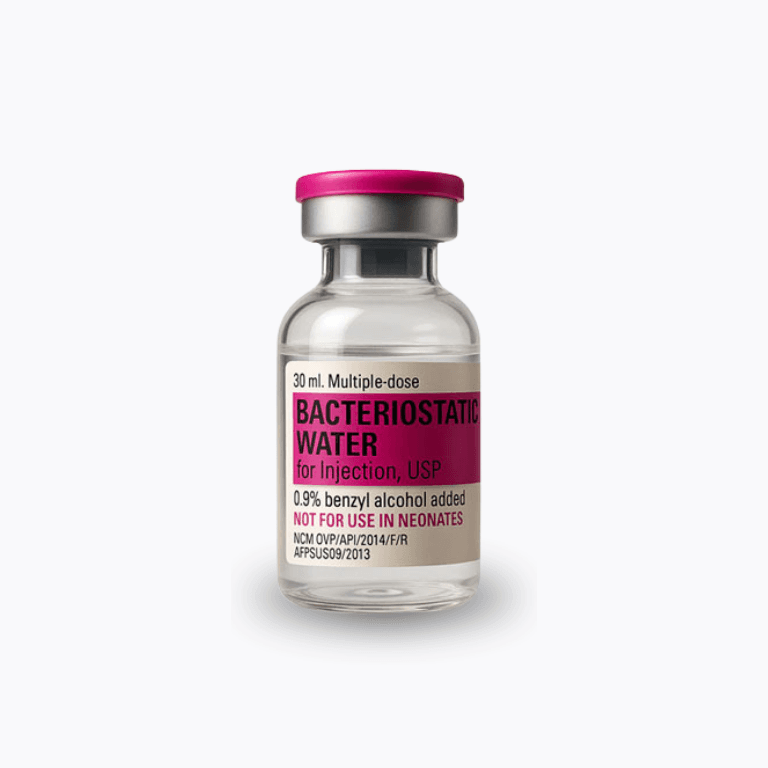
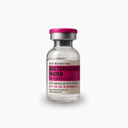
Ships as a single freeze-dried vial containing both peptides, for stability and shelf life. Before research use, it's reconstituted with bacteriostatic water. Keep the vial at -20°C and protected from light and moisture; once reconstituted, refrigerate and use promptly.
Bacteriostatic water
Needed to reconstitute
Certificate of analysis
Common questions
All products on FastPeps are labeled Research Use Only (RUO), and this is a legal requirement, not just fine print. It means these compounds are sold strictly for scientific research and laboratory purposes, not for personal use, self-administration, or medical treatment. This label exists because these compounds have not completed the FDA approval process to be sold as drugs or supplements. When you purchase from FastPeps, you are agreeing the product is for research purposes only.
For laboratory and research use only. Sold exclusively for in-vitro research and laboratory experimentation. Not a drug, supplement, or article intended for human or veterinary use; nothing here is medical advice or a claim of therapeutic benefit. Statements describe findings from published research.
Your Reliable Source for High-Quality Research Peptides
FastPeps is more than just a trusted U.S. supplier of research peptides. We are a catalyst for scientific advancement, dedicated to providing the highest quality peptides that empower our clients to push the boundaries of research.