
For research and educational purposes only. PepTalk discusses what researchers study in laboratory settings — not medical advice. Products are sold for laboratory research use only.
Research Compound
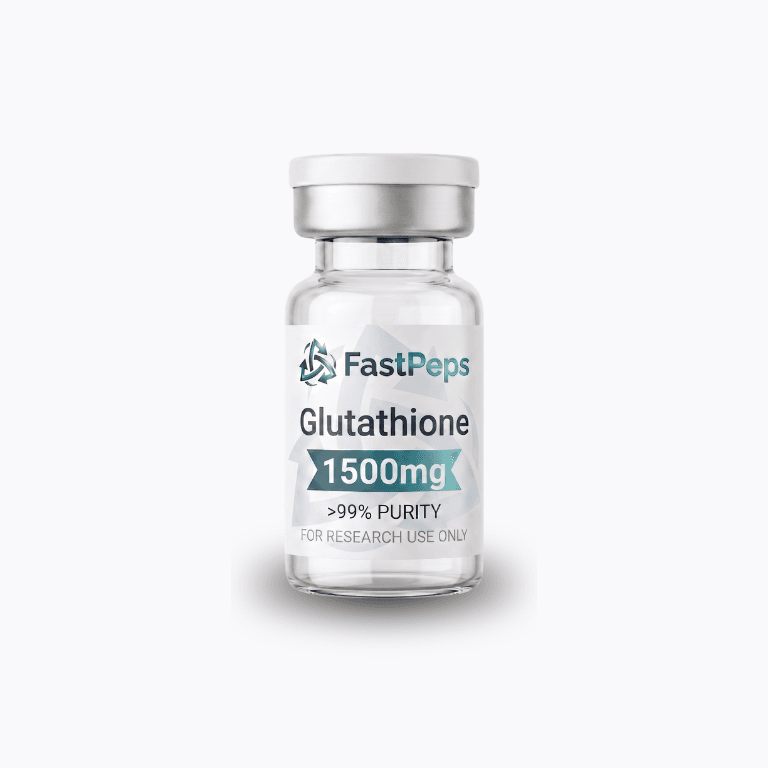
Glutathione
The body's master antioxidant — studied for cellular redox balance and liver detoxification. Ships freeze-dried, ultra-pure, ready to reconstitute.
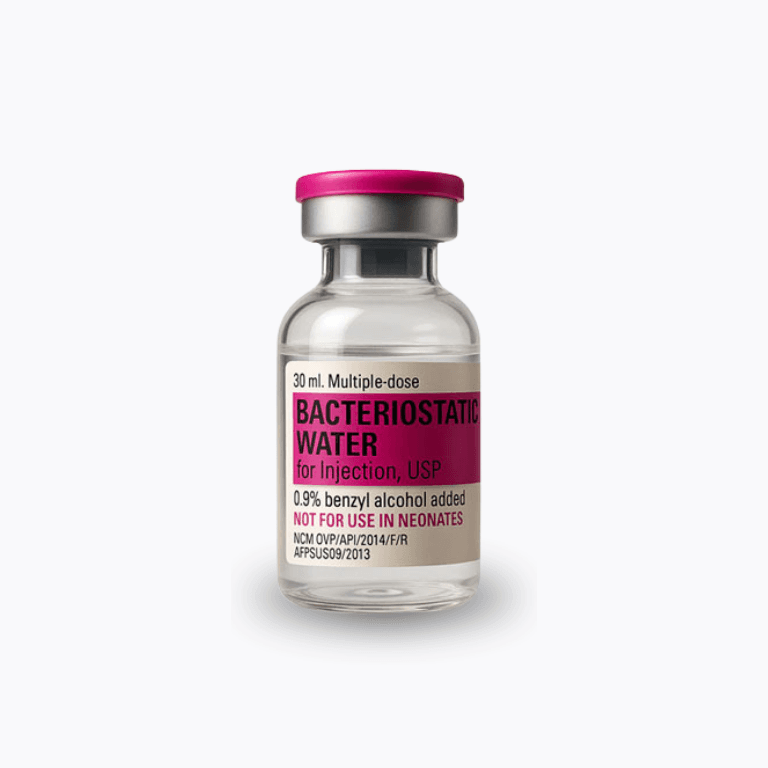
Glutathione is part of a research stack — 10% off every item plus free bacteriostatic water.


For research and educational purposes only. PepTalk discusses what researchers study in laboratory settings — not medical advice. Products are sold for laboratory research use only.
The short version
Glutathione (GSH) is a small molecule built from just three amino acids — cysteine, glycine, and glutamic acid — that nearly every cell in the body makes for itself. Researchers call it the "master antioxidant" because it sits at the center of how cells defend themselves against damage and how the liver clears unwanted compounds. It's one of the most-studied molecules in redox biology.
What researchers are looking at
Glutathione is a tripeptide — three amino acids (cysteine, glycine, and glutamic acid) joined together. Cells make it on their own and keep large amounts of it on hand, because it does one of the most fundamental jobs in biology: mopping up the reactive byproducts of normal metabolism. Those byproducts, called reactive oxygen species, damage proteins, fats, and DNA when they build up, and glutathione neutralizes them by handing over an electron from its sulfur-containing core.
The second half of the story is the liver. In what's known as phase-II detoxification, glutathione latches directly onto foreign compounds and tags them so the cell can pump them out for disposal. This is why so much of the research literature ties glutathione to liver health and to how the body handles outside chemicals. Researchers also track the ratio of "fresh" (reduced, GSH) to "spent" (oxidized, GSSG) glutathione as a readout of a cell's oxidative status — a higher ratio signals a cell that's keeping ahead of the damage.
One practical detail shapes how it's studied. Taken by mouth, glutathione is largely broken down in the gut before it can reach the bloodstream — its oral bioavailability is poor. That's why injectable, freeze-dried forms matter in research settings: they let scientists deliver intact glutathione to tissues like the liver, lungs, and nervous system, where the oral route falls short.
Reactive species neutralized
Glutathione's sulfur-containing core donates electrons to quench reactive oxygen species before they damage proteins, lipids, and DNA.
Toxins tagged for export
In phase-II liver detoxification it conjugates directly onto foreign compounds, marking them so the cell can pump them out.
Redox balance tracked
The ratio of reduced (GSH) to oxidized (GSSG) glutathione is the readout researchers use to gauge a cell's oxidative status.
Where the evidence stands
an honest mapDeeply documented across redox, immunology & dermatology literature
Clinical assays report reduced circulating oxidative biomarkers
From the lab toward the clinic
Glutathione is unusual in this category for how broadly it's documented in published medical literature, including human clinical oxidative-stress assays where researchers have reported measurable reductions in circulating oxidative biomarkers. Because the body makes it naturally, much of the work centers on replenishing depleted reserves through parenteral delivery rather than the poorly absorbed oral route.
At a glance
What it is
The master antioxidant
a 3-amino-acid tripeptide
Studied for
Redox & detox
liver phase-II, oxidative stress
Why injectable
Poor oral uptake
degraded in the gut
Research stage
Broadly documented
preclinical + clinical assays
How it arrives
Lyophilized powder
Ships freeze-dried for stability and shelf life. Before research use, it's reconstituted with bacteriostatic water. Aqueous glutathione is highly unstable, so the reconstituted solution is kept refrigerated and protected from light and used within roughly 2–3 weeks.
Bacteriostatic water
Needed to reconstitute
Certificate of analysis
Common questions
All products on FastPeps are labeled Research Use Only (RUO), and this is a legal requirement, not just fine print. It means these compounds are sold strictly for scientific research and laboratory purposes, not for personal use, self-administration, or medical treatment. This label exists because these compounds have not completed the FDA approval process to be sold as drugs or supplements. When you purchase from FastPeps, you are agreeing the product is for research purposes only.
For laboratory and research use only. Sold exclusively for in-vitro research and laboratory experimentation. Not a drug, supplement, or article intended for human or veterinary use; nothing here is medical advice or a claim of therapeutic benefit. Statements describe findings from published research.
Your Reliable Source for High-Quality Research Peptides
FastPeps is more than just a trusted U.S. supplier of research peptides. We are a catalyst for scientific advancement, dedicated to providing the highest quality peptides that empower our clients to push the boundaries of research.