
For research and educational purposes only. PepTalk discusses what researchers study in laboratory settings — not medical advice. Products are sold for laboratory research use only.
Research Blend
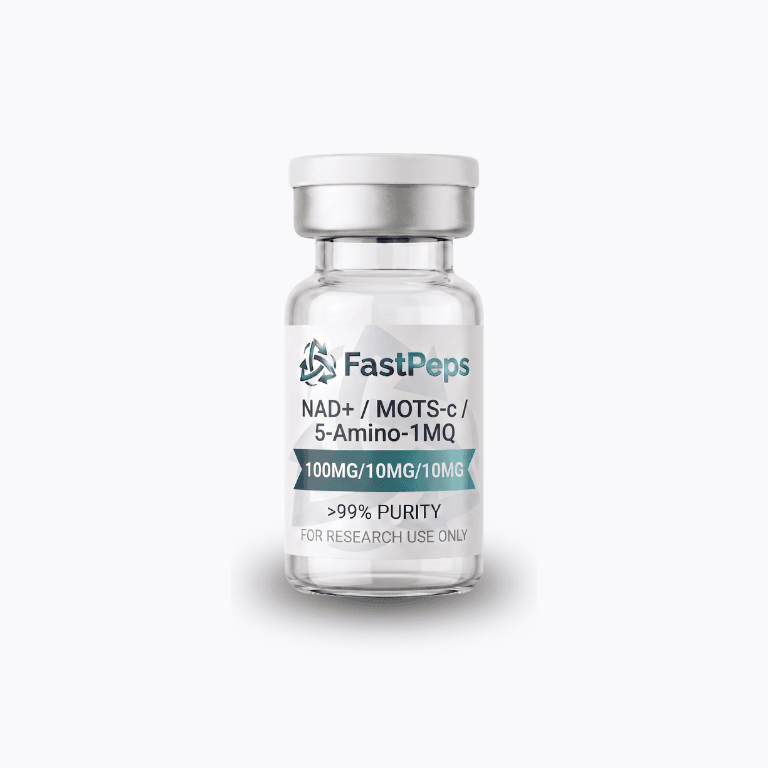
Super Metabolic Blend
A combination formulation pairing three compounds studied for complementary roles in cellular energy and metabolism — a mitochondrial coenzyme, a mitochondrial-derived peptide, and a small-molecule enzyme inhibitor. Ships freeze-dried, ready to reconstitute.
For research and educational purposes only. PepTalk discusses what researchers study in laboratory settings — not medical advice. Products are sold for laboratory research use only.
The short version
This is a three-part blend built around one idea: hit the cell's energy network from three angles at once. NAD+ is the coenzyme that fuels mitochondrial energy reactions, MOTS-c is a mitochondrial-derived peptide studied as an energy-sensor signal, and 5-Amino-1MQ is a small molecule researched for how it preserves NAD+ and acts on fat-cell metabolism. Researchers study the combination for whether covering three overlapping pathways produces a more complete metabolic picture than any single compound.
What researchers are looking at
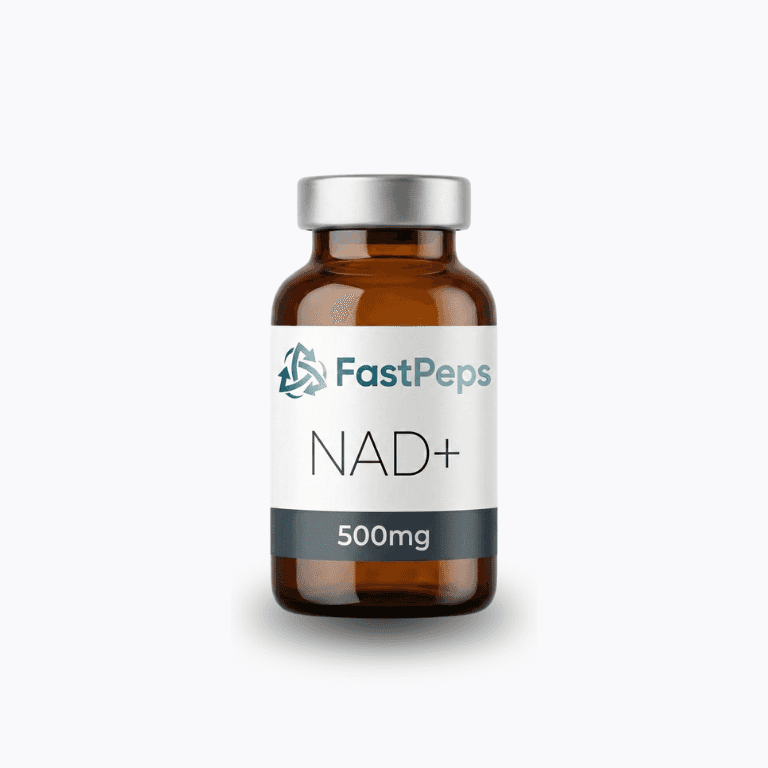
Cells run on a shared energy network, and each compound in this blend touches a different part of it. NAD+ is a coenzyme central to mitochondrial function — it fuels the reactions that release cellular energy and switches on sirtuins, a family of regulatory proteins. MOTS-c is a peptide encoded inside the mitochondria themselves; in the literature it is studied for how it activates AMPK, the cell's main energy sensor, which is linked in models to fat metabolism and insulin sensitivity. 5-Amino-1MQ is a small molecule researched for how it inhibits NNMT, an enzyme in fat cells that consumes NAD+ and is associated with slower metabolism in the models studied.
What makes the three interesting together is that they work on overlapping but distinct points in the same network rather than duplicating one another. The NAD+ and 5-Amino-1MQ relationship is the clearest example: by inhibiting NNMT, 5-Amino-1MQ is studied for whether it helps preserve and raise the NAD+ that the other components depend on. Researchers look at the blend for whether engaging the fuel (NAD+), the energy-sensor signal (MOTS-c via AMPK), and the NAD+-preserving inhibitor (5-Amino-1MQ via NNMT) at the same time produces a more comprehensive metabolic effect.
Most of what's known here comes from preclinical work — cell and animal models on each individual component — rather than controlled human trials on the combination. The findings are best read as what researchers report about these metabolic pathways in their models, not as proven outcomes. The combination itself has not been characterized in large human studies.
NAD+ fuels the mitochondria
NAD+ is the coenzyme that powers mitochondrial energy reactions and activates sirtuins, the cell's regulatory proteins.
MOTS-c flips the energy sensor
The mitochondrial-derived peptide is studied for activating AMPK, the energy sensor linked in models to fat metabolism and insulin sensitivity.
5-Amino-1MQ guards the NAD+
By inhibiting the NNMT enzyme in fat cells, it is researched for preserving NAD+ and acting on fat-cell metabolism in the models studied.
Where the evidence stands
an honest mapEach component documented in cell & animal models
No controlled human trials on the combination
At a glance
What it is
A three-part metabolic blend
NAD+ + MOTS-c + 5-Amino-1MQ
Studied for
Cellular energy & metabolism
mitochondrial & NAD+ pathways
How it works
Three overlapping pathways
fuel, energy sensor, NNMT inhibition
Research stage
Preclinical
component-level models
How it arrives
Lyophilized blend powder
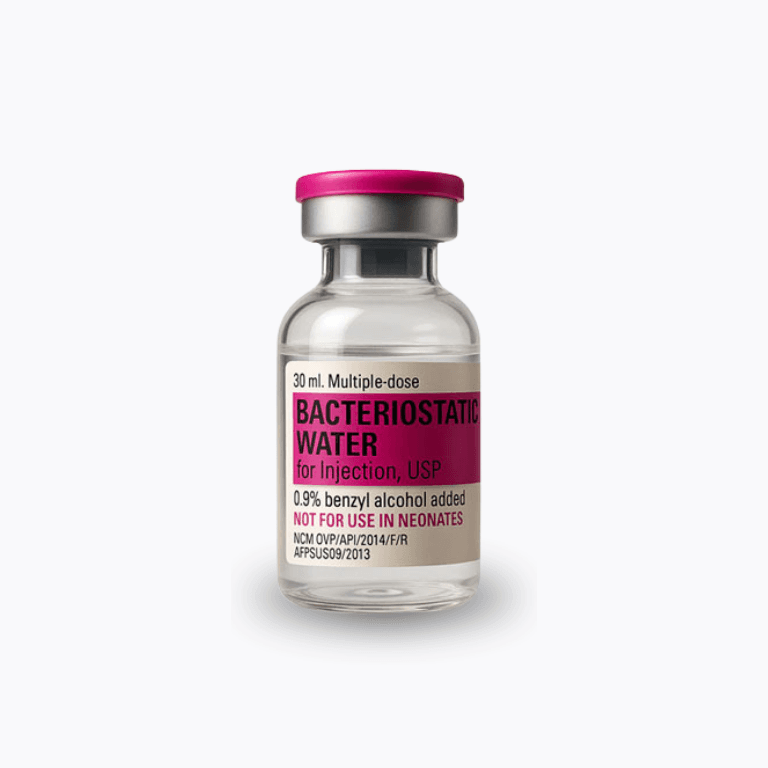
Ships as a freeze-dried blend for stability and shelf life. Store the vial at -20°C protected from light. Before research use, it's reconstituted with bacteriostatic water; once reconstituted, refrigerate it and use promptly.
Bacteriostatic water
Needed to reconstitute
Certificate of analysis
Common questions
All products on FastPeps are labeled Research Use Only (RUO), and this is a legal requirement, not just fine print. It means these compounds are sold strictly for scientific research and laboratory purposes, not for personal use, self-administration, or medical treatment. This label exists because these compounds have not completed the FDA approval process to be sold as drugs or supplements. When you purchase from FastPeps, you are agreeing the product is for research purposes only.
For laboratory and research use only. Sold exclusively for in-vitro research and laboratory experimentation. Not a drug, supplement, or article intended for human or veterinary use; nothing here is medical advice or a claim of therapeutic benefit. Statements describe findings from published research.
Your Reliable Source for High-Quality Research Peptides
FastPeps is more than just a trusted U.S. supplier of research peptides. We are a catalyst for scientific advancement, dedicated to providing the highest quality peptides that empower our clients to push the boundaries of research.