
For research and educational purposes only. PepTalk discusses what researchers study in laboratory settings — not medical advice. Products are sold for laboratory research use only.
Research Peptide
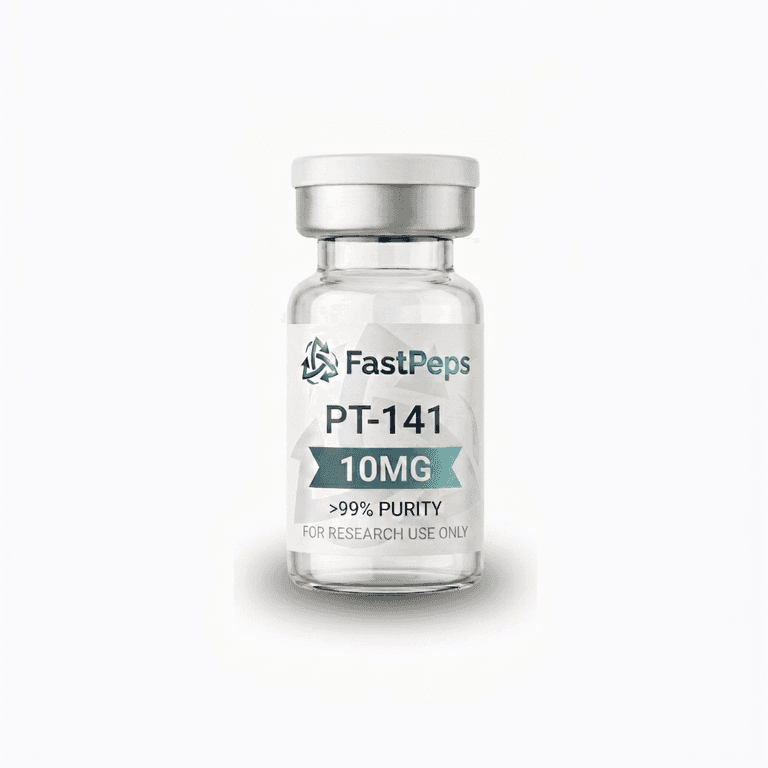
PT-141
A melanocortin receptor agonist studied for brain-driven arousal pathways — freeze-dried, ultra-pure, ready to reconstitute.
For research and educational purposes only. PepTalk discusses what researchers study in laboratory settings — not medical advice. Products are sold for laboratory research use only.
The short version
PT-141 (Bremelanotide) is a small cyclic peptide — a synthetic cousin of a hormone the body already makes (alpha-MSH). What makes it stand out to researchers is where it works: in the brain rather than on blood flow. That central, neurogenic route is why it draws attention separate from the more familiar circulation-focused compounds.
What researchers are looking at
Most of the well-known compounds in this space work on plumbing — they widen blood vessels and improve flow (the PDE5-inhibitor route). PT-141 is studied for a different starting point entirely: it acts centrally, in the brain, on the signaling that comes before that. Researchers describe it as a melanocortin receptor agonist, meaning it switches on a family of receptors (chiefly MC3R and MC4R) clustered in the hypothalamus.
By crossing into the brain and binding those receptors in a region called the medial preoptic area, it's studied for how it sets off a neurochemical cascade tied to desire and arousal. Because the trigger is neurological rather than vascular, researchers observe activity in the models independent of blood-flow status — and notably, in both male and female study models, not just one.
Much of the foundational work is preclinical, but this compound is unusual for the page in carrying real human data: it advanced through controlled clinical trials and is the active molecule in an FDA-approved product. The findings are best read as what researchers report about the arousal pathway in those studies rather than a personal outcome — but the central mechanism is what keeps it under scientific attention.
Into the brain
The peptide crosses the blood-brain barrier and reaches melanocortin receptors in the hypothalamus, rather than acting on blood vessels.
Receptors switched on
It binds MC3R and MC4R — chiefly MC4R in the medial preoptic area — the receptors researchers tie to arousal signaling.
Neurochemical cascade
Engaging those receptors is studied for initiating a central cascade linked to desire, independent of vascular flow.
Where the evidence stands
an honest mapCentral arousal pathway documented across animal models
FDA-approved (Vyleesi); Phase 3 clinical data published
From the lab toward the clinic
PT-141 is one of the few compounds on the page with an approved human medicine behind it: bremelanotide is FDA-approved as Vyleesi for female sexual arousal. In the published Phase 3 clinical literature, researchers reported statistically significant increases in sexual-desire scores versus placebo — among the most rigorous human data in this category.
At a glance
What it is
A melanocortin agonist
alpha-MSH analog, 7 aa
Where it acts
In the brain
central, not vascular
Studied for
Arousal pathways
male & female models
Research stage
FDA-approved molecule
Phase 3 data published
How it arrives
Lyophilized powder
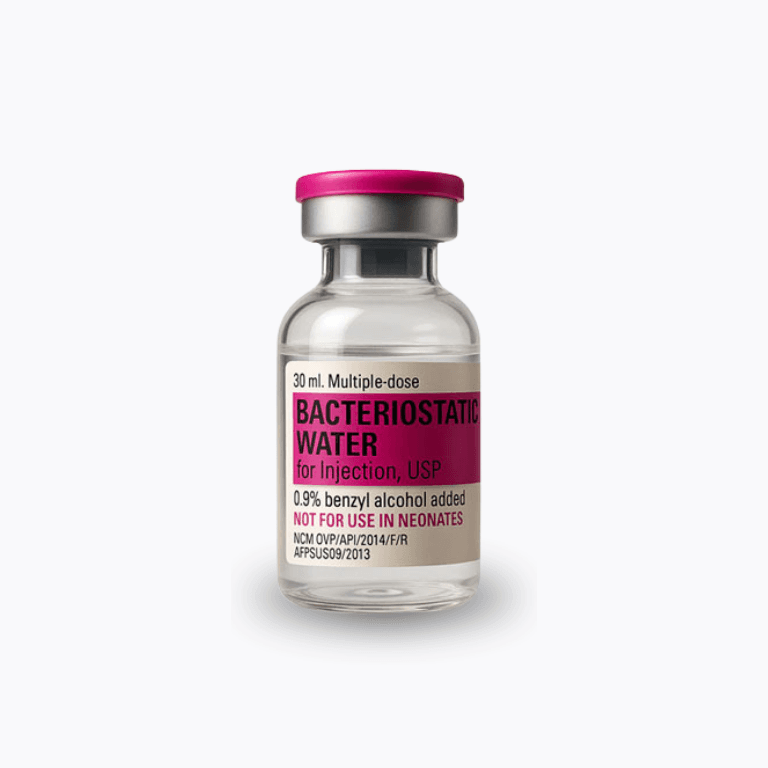
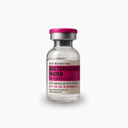
Ships freeze-dried for stability and shelf life. Before research use, it's reconstituted with bacteriostatic water.
Bacteriostatic water
Needed to reconstitute
Certificate of analysis
Common questions
It works through a different mechanism. PDE5-type compounds act on vascular flow, widening blood vessels; PT-141 is studied as a melanocortin receptor agonist that acts centrally in the brain on the arousal signaling that comes earlier in the pathway. That's why researchers observe activity in the models independent of blood-flow status, and in both male and female study models.
For laboratory and research use only. Sold exclusively for in-vitro research and laboratory experimentation. Not a drug, supplement, or article intended for human or veterinary use; nothing here is medical advice or a claim of therapeutic benefit. Statements describe findings from published research.
Your Reliable Source for High-Quality Research Peptides
FastPeps is more than just a trusted U.S. supplier of research peptides. We are a catalyst for scientific advancement, dedicated to providing the highest quality peptides that empower our clients to push the boundaries of research.